Walks And Routes
A walk through the historic bathhouses
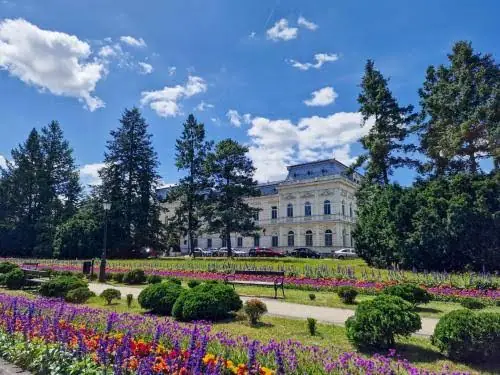
Older descriptions of Ciechocinek refer repeatedly to numbered łazienki, or baths. Pick up a current map and the same numeral can appear against a different building. This walk uses the historic designations I to IV in the National Institute of Cultural Heritage’s inventory. Save its maps and photographs before setting out. Kościuszki, Armii Krajowej and Raczyńskich are the street names that tie the ensemble together.
Start with an engineering clue
At the Committee Baths, historically number I, look for evidence of a complex built around a courtyard and for the former boiler chimney mentioned by the town. The stories that matter here concern water, heat and access to the rooms. The monument to physician Roman Ignatowski adds a reminder that people had to establish and organise the treatment service as well.
Compare the two neighbours
Head towards the Treasury Baths, number II, at Raczyńskich and św. Brata Alberta. Look for the gable over the central section. The Bank Baths, number III, are nearby. Its front has another projecting entrance, but small faces and cherub heads feature in the window decoration. The heritage photographs make a practical reference when the two façades are unfamiliar. Stand back for one whole-building view before moving in for the detail.
Finish at the modern number one
The fourth historic bathhouse now forms part of the operating facility called Łazienki Uzdrowiskowe Nr I. The change of name is the reason for using historic numbers throughout this itinerary. From a public path, look at the way the building addresses the flower beds and the main promenade. You have moved from a boiler chimney to a deliberately public-facing architectural setting.
End at Hellwig’s gardens if members of the group want a seat or a separate stroll. Anyone coming to meet you should receive the modern place name and a specific position on the promenade. Sending only “bathhouse number one” could guide them to the other end of your historical sequence.
Prepared using local material from Życie Ciechocinka, with additional public information checked during preparation.